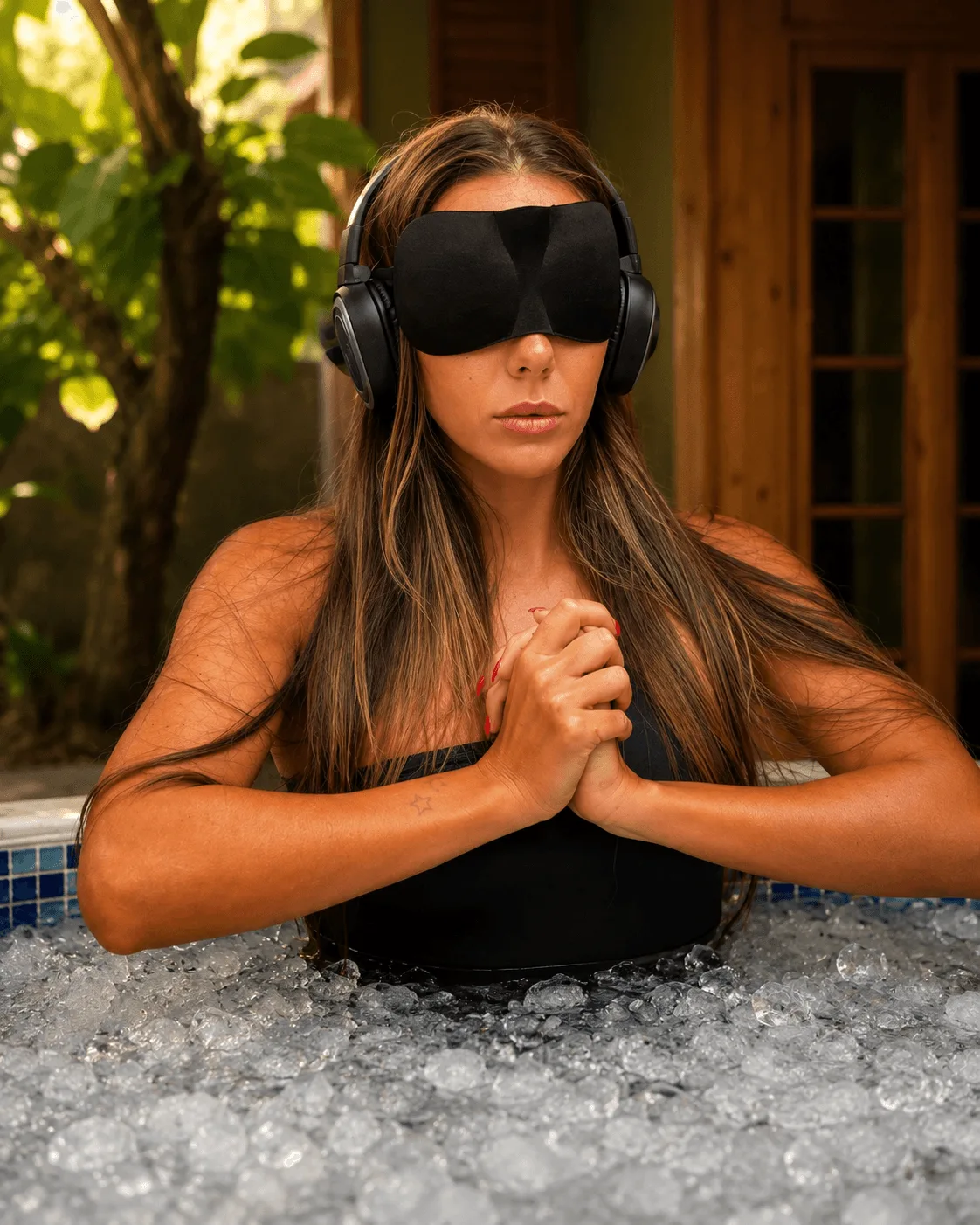
Here's the thing nobody tells you about the ice bath.
The cold isn't the lesson — it's just the loudest room you'll ever try to stay calm in. Drop into one-degree water and every cell screams the same word: run. Racing breath, slamming heart, full fight-or-flight. And then something strange becomes possible: you can turn it off. Not with force. With a code.
It was never willpower.
We're taught the strong ones just want it more — grit harder, push longer, suffer better. It's a lie that keeps you small. Real capacity lives one layer beneath the will, in your nervous system. And you have exactly one tool that speaks to it directly, on demand, anywhere on earth: your breath.
Ignite calm and you ignite capacity. Calm has a formula — a slow breath, with short pauses in between. Run the pattern and you send your body the one message that changes everything: I am safe. I can sustain this.
Slow breath. Short pauses.
You don't out-muscle the moment. You down-shift before your body can hijack you. Four moves — in the bath, before the lift, ahead of the hard conversation.
Breathe in slowly, through the nose.
Gentle, unhurried, about four counts. A little less air than you think you need. No gasp.
Exhale longer than you breathed in.
Let it leave slowly, six counts or more. The long exhale is the switch — it flips you toward calm.
Pause, softly, after the exhale.
A short, comfortable hold. Never long, never under water. The part everyone skips, and the part that works.
Drop every ounce of tension, and repeat.
Loose shoulders, soft jaw, still hands. Settle into five or six breaths a minute, and within sixty seconds the body that wanted to panic simply doesn't.
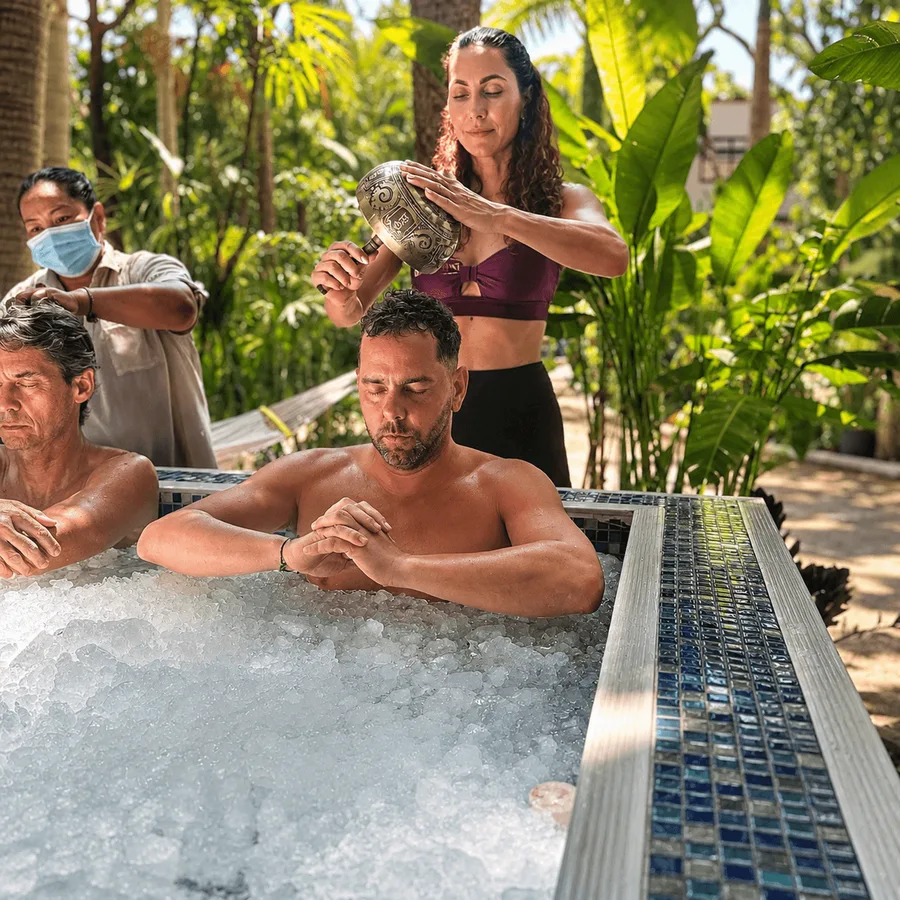
Your one manual override.
Breathing is the only autopilot function you can grab the wheel of — and through it, steer the rest. A long exhale flips you from go into rest-and-restore. Breathe at around six cycles a minute and your heart rate falls into rhythm with your blood pressure, lifting vagal tone — the body's master brake — and raising heart-rate variability, the best marker of a system that recovers fast and stays composed under load.
And those small pauses gently raise your tolerance to carbon dioxide, training you to stay calm exactly where most people panic. Not a gift you were born with. A skill you build, one breath at a time.
Never practise breath holds in or near water, and never alone in the ice. Skip cold exposure and breath holds if you're pregnant or have heart, respiratory or blood-pressure conditions — check with your doctor first.
The code runs everywhere.
The switch you find in the ice isn't a cold-water trick — it's portable. Take the same slow breath and soft pause into the hardest set of your workout and you find a gear you didn't know you had. Take it into the conversation you've been dreading, the deadline, the moment everything in you wants to bolt — and the challenge stops being survivable and starts being winnable.
One breath. Every arena. The first of the personal apps you never knew you were running.