Here's what's happening, in plain language.
Raising your VO2 max
VO2 max is the amount of oxygen your body can actually use when you're working hard. It's the single clearest measure of how fit your heart, lungs, and muscles are — and one of the strongest predictors of lifespan ever found. In a study of more than 120,000 people, higher fitness meant a dramatically lower risk of dying, with no upper limit to the benefit. Low fitness carried a risk on par with smoking.
You raise VO2 max by moving at a pace that makes you breathe a little harder, regularly — and a hill does this for you automatically. Here's the part that earns the name "age backwards": that kind of effort triggers your cells to clear out their old, worn-out power plants — the mitochondria — and build brand-new ones. Out with the tired, in with the fresh. Over time, more of your body runs on younger machinery.
"Low fitness carried a risk on par with smoking. Higher fitness showed no upper limit to the benefit."
Charging your cells with infrared light
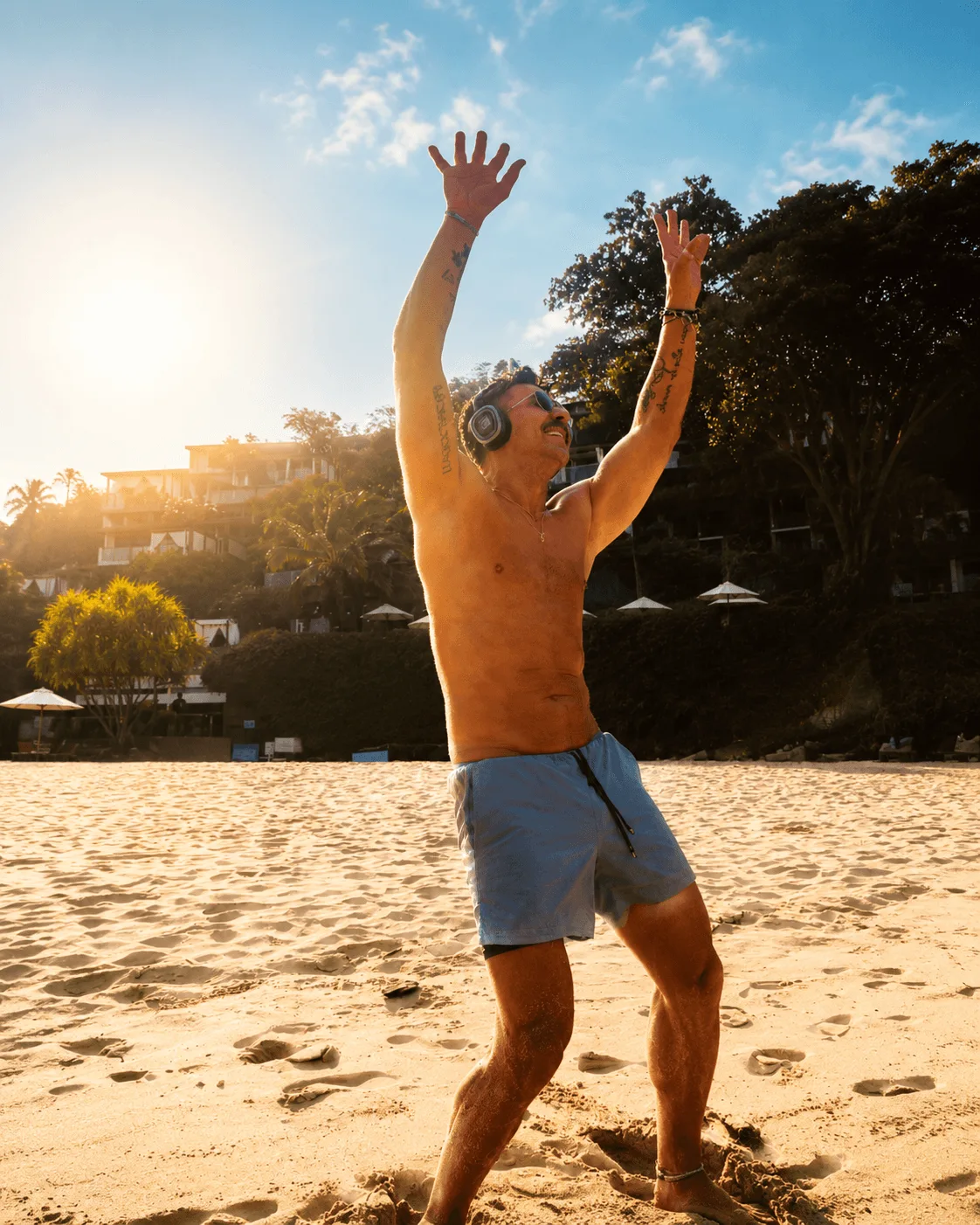
The early sun — low on the horizon, gold rather than harsh — is rich in red and near-infrared light. This isn't the burning UV you protect yourself from at midday. Near-infrared passes gently into your body, and your mitochondria are built to absorb it.
Inside every cell sits an enzyme called cytochrome c oxidase; when it catches near-infrared light it works more efficiently and your mitochondria produce more energy (ATP). Researchers call this photobiomodulation — light, quite literally, tuning up your cellular engines. It's the same emerging science behind red-light therapy for skin and recovery, and the best red light on earth is free — more on that here. Morning light does one more thing: caught early in the eyes, it sets your body clock, which deepens the sleep you'll get that night — and sleep is when most repair happens.
Why we combine them
Both tools aim at the same target: your mitochondria. The climb builds new ones. The infrared light charges them. Movement and morning light together are greater than either alone — you renew the engines and power them up in the same twenty minutes. That's the heart of our Age Backwards program.
How to start tomorrow
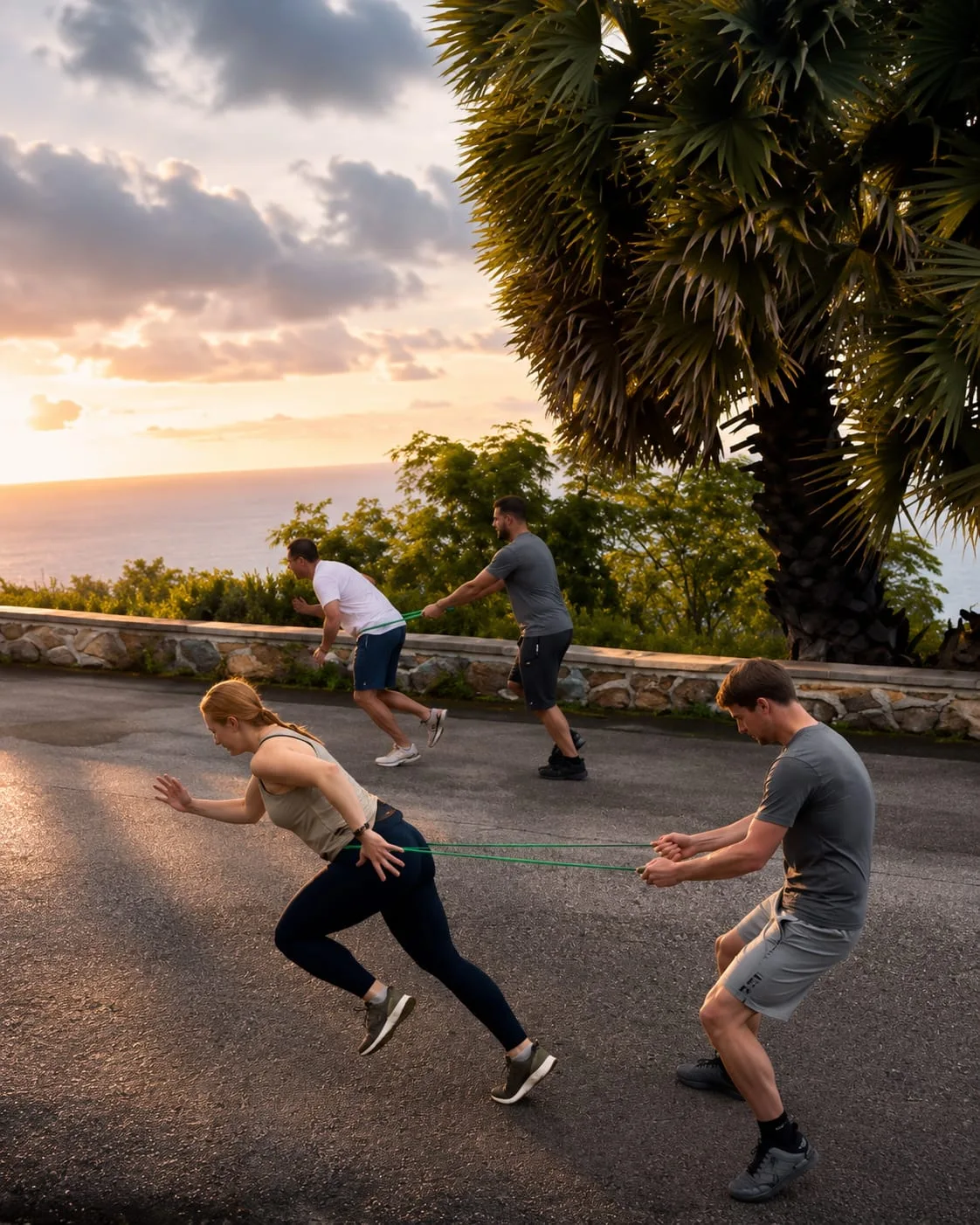
You don't need our hill or any equipment. Go out near sunrise. Find a hill, a long stairway, or a brisk uphill street. Walk up at a pace where you can just barely still talk. Let the low morning sun reach your skin and eyes for a few minutes while you move. Come down gently.
A few mornings a week is plenty, and you add a little as it gets easier. Early light. Early movement. Oxygen. Three simple things, each proven to help you age well — and together, quietly extraordinary.
The version we've built
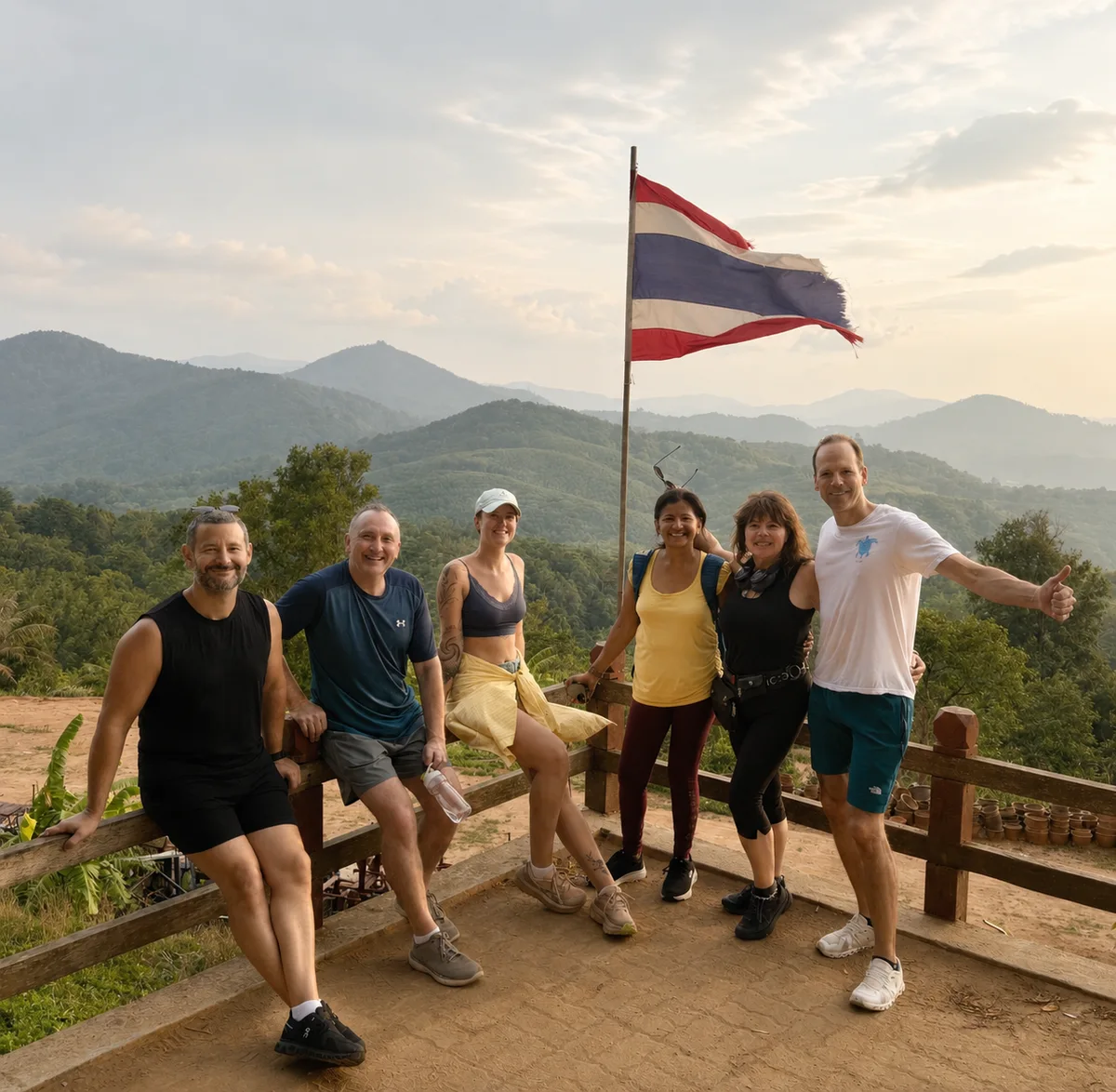
With us, this becomes a ritual instead of a resolution. We walk the hills together at first light, teach you to read your own effort, and wrap it in the food, recovery, and calm that make it stick — so you leave knowing how to keep aging backwards long after you've gone home. The door's open.
Ready to make it a morning ritual?
See Rates & Availability →The science, briefly — cardiorespiratory fitness (VO2 max) and mortality: Mandsager et al., JAMA Network Open, 2018. Near-infrared photobiomodulation of cytochrome c oxidase and ATP: reviewed in the photobiomodulation literature. Educational only, not medical advice; check with your doctor before starting new exercise or sun exposure, especially with a heart condition.